READY to host
PARTICIPATING ORGANISATIONS
FACK e.V.
FACK e.V. (Futurist’s Agency for a New Cultural Kick-Off) is a youth organization based in Altenburg, Thuringia, Germany. Its mission is to empower young people (ages 7–27) to become self-determined, innovative, and active shapers of their community. FACK addresses key regional challenges such as youth disengagement, rural decline, depopulation, and rising social polarization by creating inclusive opportunities for participation and civic action.
The organization operates the FACKtory, a youth center with a makerspace, recording studio, art and gaming rooms, and event spaces, where young people can experiment, learn, and bring their ideas to life. The FACKademy offers non-formal education, workshops, and coaching that strengthen democratic engagement, creativity, and intercultural understanding. One of its flagship projects is R:EVOLUTION, a participatory budgeting initiative where youth directly fund and implement their own projects, ranging from outdoor cinemas to community sports spaces.
FACK’s work also extends beyond Altenburg through the creation of local youth hubs in rural villages across the region. Each hub is co-created with local youth, ensuring that the activities reflect their interests and needs—whether it’s cultural events, sports, or creative workshops. By decentralizing participation, FACK helps reduce barriers for young people in remote areas, strengthens community ties, and ensures that rural youth are equally included in shaping the future of their region.
Varėnos kultūros centras
Varėna district is the largest in Lithuania, and its cultural life is taken care of by a large team of staff (around 30 cultural and art professionals, 100 employees in total). The Varėna Cultural Center (VKC) has 16 structural divisions and a crafts center. Since its establishment, the center has been known for the uniqueness of its events. Much attention has been given to organizing quality leisure activities for different groups of society and meeting the cultural needs of the community.
VKC fosters ethnic culture, encourages the activities and vitality of art enthusiasts, folk artists, and art groups, creates artistic programs, develops educational and entertainment activities, promotes professional art, prepares cultural program projects, and ensures their implementation.
With long-standing experience and many original ideas, VKC actively nurtures the cultural life not only of Varėna town but of the entire district. All this guarantees an engaging, high-quality, joyful, meaningful, and enriching leisure experience.
Varėna Cultural Center:
- Helps to foster diverse artistic self-expression;
- Preserves and promotes the vitality of art enthusiasts, folk art, and art groups;
- Collects and documents the events of Varėna’s cultural life;
- Strives to integrate into various national and international projects;
- Oversees the work of its territorial divisions;
- Promotes the culture of Varėna town and district in Lithuania and abroad;
- Organizes cinema screenings;
- Provides Non-Formal Children’s Education and Culture Pass services;
- Organizes exhibitions of amateur and professional art;
- Prepares and implements regional cultural program projects;
- Preserves, spreads, and passes on cultural and local traditions from generation to generation;
- Responds to and nurtures the artistic needs of community members;
- Protects, enriches, and maintains the cultural uniqueness of the region;
- Promotes both general and ethnic culture;
- Helps the public to engage with the values of professional art, literature, music, fine arts, photography, and cinema.
Pro Vobis – National Resource Center for Volunteering
Pro Vobis is the leading organization in Romania dedicated to promoting and developing volunteerism, as a key resource for social change and community development. Founded in 1992, it was the country’s first independent Volunteer Center and today serves as the National Resource Center for Volunteering, supporting NGOs, institutions, companies, and communities to harness the power of volunteers.
With more than 30 years of experience, Pro Vobis provides training, consultancy, and practical resources on volunteer management. It organizes National Volunteer Week yearly (the 24th consecutive edition took place in 2025), and it also coordinates national and European projects that strengthen civic engagement and inclusion. The organization has coordinated and partnered in multiple Erasmus+ KA2 projects, Active Citizens Fund initiatives, and CERV programs, developing innovative tools for inclusive volunteering, family volunteering, mentoring, and competence validation. It has also been an EVS/ESC Advice and Support structure for the Romanian NA for 4 years in a row and has, until now, sent over 140 Romanian volunteers to European volunteering projects abroad.
Pro Vobis also:
- Promotes volunteering as a tool for lifelong learning, social inclusion, and community resilience
- Develops and disseminates publications and practical tools for NGOs and practitioners, as well as resources on volunteer management, mentoring, competence validation, service-learning, active participation, as well as voluntariat.ro, Romania’s central online platform for volunteerism
- Facilitates partnerships between NGOs and companies, designing volunteer programs that involve hundreds of employees, through the Win Win Corporate Volunteering program, in activities such as environmental actions, social support for vulnerable groups, beautification projects, and skill-based volunteering.
- Hosts and facilitates national conferences on volunteering, shaping debates on legal frameworks, ethics, and recognition of volunteering in Romania.
- Acts as a hub for advocacy and networking through the Romanian Coalition for Volunteering and active membership in CEV – Centre for European Volunteering, ensuring that European and global good practices are brought into the national context.
- Coordinates National Volunteer Week in Romania, engaging hundreds of organizations and communities each year in campaigns, events, and activities that raise awareness about the value of volunteering and the power to shape one’s own community through active engagement.
- Supported the creation and growth of a national network of local Volunteer Centers, providing training, consultancy, and networking opportunities to strengthen local volunteering infrastructures.
- Coordinated the European Year of Volunteering 2011 activities in Romania, bringing national visibility to volunteering through large-scale campaigns, conferences, and stakeholder mobilization.
about the project
Ready To Host was created to empower NGOs in rural areas to safely and effectively host volunteers. By addressing discrimination and fostering inclusivity, the project strengthened organizational capacity, established best practices in volunteer management, and built supportive networks. Our ambition was to ensure that volunteering becomes a truly meaningful experience – one that enriches both local communities and the volunteers themselves.
Through this project, we set out to:
- Empower rural NGOs to confidently host volunteers.
- Foster inclusivity and reduce discrimination in volunteering.
- Strengthen organizational capacities and skills in volunteer management.
- Create supportive networks that encourage cooperation and knowledge-sharing.
To bring these goals to life, the project included several key activities:
- Kick-off meeting and exploratory visits in Weimar and Erfurt, Germany, to explore local contexts and challenges.
- Training course in Marcinkonys, Lithuania (Varėna region) to build the capacity of NGOs and volunteer coordinators.
- Creation of regional networks in Lithuania and Germany, providing ongoing peer support.
- Best Practices Catalogue, a resource compiling effective strategies and tools for hosting volunteers.
- Multiplication Actions in Germany, Lithuania, and Romania, including community events and initiatives to share knowledge and engage a wider audience.
By the end of the project, we:
- Strengthened the capacity of rural NGOs to host volunteers effectively.
- Reduced discrimination and promoted inclusive practices in volunteering.
- Enhanced the overall well-being of both volunteers and communities.
- Delivered a Best Practices Catalogue as a lasting resource for NGOs.
- Established regional support networks for continued collaboration.
- Raised awareness and inspired change through local multiplication actions.
Meeting in weimar
Between 2nd and 7th March 2025, our consortium met in Weimar for the KoM and a study visit. During the study visits to four organisations in Thuringia (OMA e.V., EJBW, CGE Erfurt e.V., and Next Level e.V.), as well as an expert talk with a representative of the National Agency Monitoring Team, we summarised our findings in a report. The aim of the visits was to gain an understanding of the European Solidarity Corps (ESC) volunteering landscape in the region, with a focus on trends, needs, barriers, and best practices in mentoring and hosting, as well as the specific impact of smaller city and rural contexts.
Link to summary
BACKGROUND AND NEED
Background and need from the perspective of FACK
Together, we believe that strengthening the capacity of rural organizations to host international volunteers is essential for ensuring that volunteering remains an inclusive, sustainable and transformative experience for both young people and the communities they join.
Background and need for the project from VKC perspective
Varėna Cultural Center is based in the Varėna district, the largest yet one of the least populated regions in Lithuania. Life in such a peripheral area has its strengths: a rich cultural heritage, strong community ties, and unique natural surroundings. At the same time, it also comes with challenges, particularly when it comes to welcoming and integrating international volunteers. Before starting to host European Solidarity Corps (ESC) volunteers, it was clear that we needed to prepare ourselves thoughtfully and carefully.
One of the main concerns in rural areas is the risk of isolation. Volunteers who come from abroad to live and work in small towns often face limited opportunities for social interaction, cultural exchange, and everyday support. Unlike big cities, where communities are more diverse and public transport is well connected, rural Lithuania can feel distant and even lonely for newcomers. Ensuring that ESC volunteers would feel included and supported was therefore a top priority.
As a public institution, Varėna Cultural Center employs around 100 people, including 30 cultural workers spread across 16 structural units. This means that the responsibility of hosting volunteers is not limited to one person or department, but rather requires coordinated involvement from a wide range of staff members. For us, preparing to host was not only about making space for volunteers, it was about equipping our own team with the knowledge, skills, and sensitivity needed to guide and support young people in a new cultural environment.
Another important aspect is our local context. Lithuania continues to face the legacy of its post-Soviet reality, where attitudes towards volunteering are still developing, and intercultural experiences are less common in smaller communities. On top of this, Varėna district lies on the border with Belarus, a factor that adds its own sensitivities to questions of identity, belonging, and inclusion. All of these realities shaped the way we approached the project.
For these reasons, it was important not to rush into hosting international volunteers without building strong foundations first. We needed time to reflect, to strengthen our organisational capacities, to ensure that our staff were properly prepared, and to create support structures that would allow volunteers to thrive (not just survive) in our community.
The Ready to Host project gave us that opportunity. It provided the space to step back, to invest in training, to build networks with partners abroad, and to establish a framework that makes hosting sustainable in the long run. The project was, above all, about ensuring that when we welcome international volunteers, they will find not only a placement, but also a community where they can feel connected, valued, and at home.
Background and need for the project from Pro Vobis
As the National Resource Center for Volunteering, Pro Vobis has a broad overview of both the potential and the vulnerabilities of volunteering in Romania and across Europe. Our 30 years of experience show that while volunteering is increasingly valued, rural NGOs often lack the tools, confidence and support structures needed to host international volunteers in a way that is safe, inclusive and sustainable.
In small communities, the risks are tangible: limited opportunities for social interaction, insufficient mentoring systems, or discriminatory attitudes can easily turn volunteering into a difficult rather than empowering experience. These realities make hosting particularly challenging in rural or sensitive contexts. At the same time, the recent rise of populism, extremist narratives, and anti-European sentiments across the continent underscores the urgency of strengthening hosting capacities. Without adequate preparation, international volunteering may risk reinforcing stereotypes instead of promoting solidarity and intercultural dialogue. Taking a closer look at how these issues manifest in practice and how we can work together to combat their effects is critical for youth work and volunteer involvement across EU borders.
From our perspective as a resource center, the need for the Ready to Host project was therefore clear. Rural organizations require targeted support to reflect on their capacities, strengthen volunteer management skills, and design support systems that enable both volunteers and communities to thrive. Equally important is creating opportunities for NGOs to exchange knowledge and feel part of wider peer networks, so they are not left to face these challenges in isolation.
In our role as national and European experts, we identified several core needs addressed by this project:
- Capacity building – equipping rural NGOs with training, methods, and mentoring tools to host ESC volunteers with confidence.
- Inclusion and safety – tackling risks of discrimination, isolation, and exclusion by preparing staff with strategies for empathy, cultural sensitivity, and structured support.
- Connection with European standards – ensuring that local practices align with ESC quality requirements and benefit from tested European approaches.
- Networking and peer learning – building support structures that enable organizations to share experiences, solutions, and long-term cooperation.
- Advocacy and sustainability – linking local hosting practices with national and European trends, so lessons learned translate into stronger frameworks for volunteering.
For Pro Vobis, the significance of this project lies in consolidating the broader volunteering ecosystem. By investing in rural NGOs, we ensure that international volunteering remains a meaningful, inclusive and transformative experience for both the young people involved and the communities that welcome them. Ready to Host gave us the opportunity to explore in depth the specific challenges of volunteering in rural areas, in locations prone to racism even towards volunteers, and with a high risk of isolation, and then design a training course meant to prepare local organizations for hosting ESC volunteers with greater confidence, care and inclusivity.
Training course in lithuania
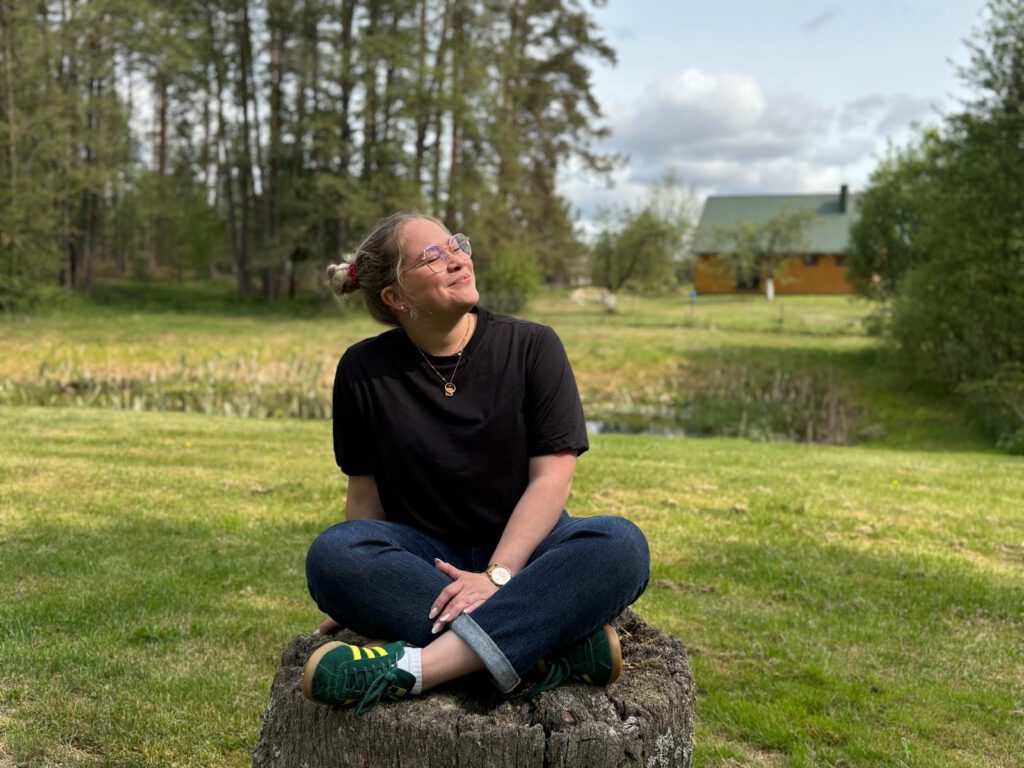
At the beginning of June 2025, Marcinkonys became the meeting point for 22 dedicated youth, culture, and community workers from Lithuania, Romania, and Germany. They came together for the training course and makeathon “Ready to Host”, a week-long programme designed to strengthen organisations in rural areas and prepare them to host international volunteers with confidence and care.
The main aim of the training was to build the capacity of partner organisations and stakeholders in creating high-quality support structures for volunteers in rural areas, prone to discrimination and isolation, while increasing the overall impact of the European Solidarity Corps programme on young people, host organisations, and local communities.
Learning and exchange
Throughout the week, participants gained a deeper understanding of the ESC programme and exchanged experiences about how volunteering shapes lives and communities. The sessions focused on practical aspects of volunteer management, from establishing support systems and integrating new volunteers into local teams to addressing barriers of inclusion that volunteers often face in rural or discriminatory environments.
A special emphasis was placed on empathy and sensitivity, encouraging hosts to reflect on the realities of young people who may arrive with fewer opportunities, different cultural backgrounds, or experiences of discrimination.
Who took part
The group of 22 participants represented NGOs and cultural organisations preparing to host ESC volunteers in their regions. Many will soon take on roles as mentors, tutors, coordinators, or cultural buddies for incoming volunteers. Their diversity of backgrounds created a rich space for exchange, collaboration, and mutual support.
Methods and activities
The training followed the principles of non-formal education and experiential learning. A study visit to the Youth Occupation Center in Druskininkai gave participants first-hand insights into local realities, sparking ideas about both opportunities and challenges for hosting volunteers in rural contexts.
Every day included moments of reflection and sharing, ensuring that learning remained grounded in practice and connected to participants’ local realities. European Solidarity Corps quality standards served as a guiding framework throughout the week.
The highlight of the programme was the Makeathon, an intensive, creative space where participants worked in teams, supported by experts, to design concrete solutions for challenges they face in volunteer hosting. The ideas generated here will directly influence how organisations across three countries welcome and support their future volunteers.
By the end of the training, participants were left with:
- stronger skills and confidence in volunteer management,
- new strategies for inclusion in rural and sensitive environments,
- concrete action plans tailored to their organisations,
- and a supportive network of peers across Lithuania, Germany, and Romania.
The training course proved to be not just a professional development experience, but also a space of inspiration, collaboration, and solidarity. In the long term, the outcomes of “Ready to Host” will continue to strengthen the volunteering ecosystem in rural Europe and ensure that international volunteering remains an inclusive and meaningful experience for everyone involved.
Participants testimonies
“This training changed the way I see hosting international volunteers – I now understand that it’s not just about logistics, but about creating a supportive and meaningful experience for everyone involved. I want to implement a more structured onboarding process, regular emotional check-ins, and involve the local community more in the integration of volunteers”.
“This training helped me see this idea as a great opportunity for learning and growth. I realized that international volunteers bring diverse perspectives, skills, and fresh energy. For now, we have a meeting to develop a structured onboarding and to find opportunities for the development of the organization”.
“Now it is clearer how everything works, what steps should be taken one after another during the process”.
“I gained a clear understanding of how the European Solidarity Corps (ESC) works. Insight into the volunteer journey. The power of teamwork and collaboration”.
“Hosting is not only an improvement for the organisation, it also comes with big responsibilities. I’ve learned a lot of new things about the ESC program and I have a clearer view on it”.
“To create an inclusive environment, I would focus on clear communication, cultural sensitivity, and emotional support. I would make sure volunteers feel heard, respected, and part of the team from the beginning. Regular check-ins, involving them in decision-making, and offering a safe space for feedback are key steps in making them feel included and supported”.
Ready to host video
CONTACT INFORMATION
Aiste Slajute
International project manager in Varena cultural center
0037066910960
tarptautiniaiprojektai@varenoskultura.lt
Corina Pintea
Executive Director and Trainer – Pro Vobis – National Resource Center for Volunteering in Romania
0040755045100